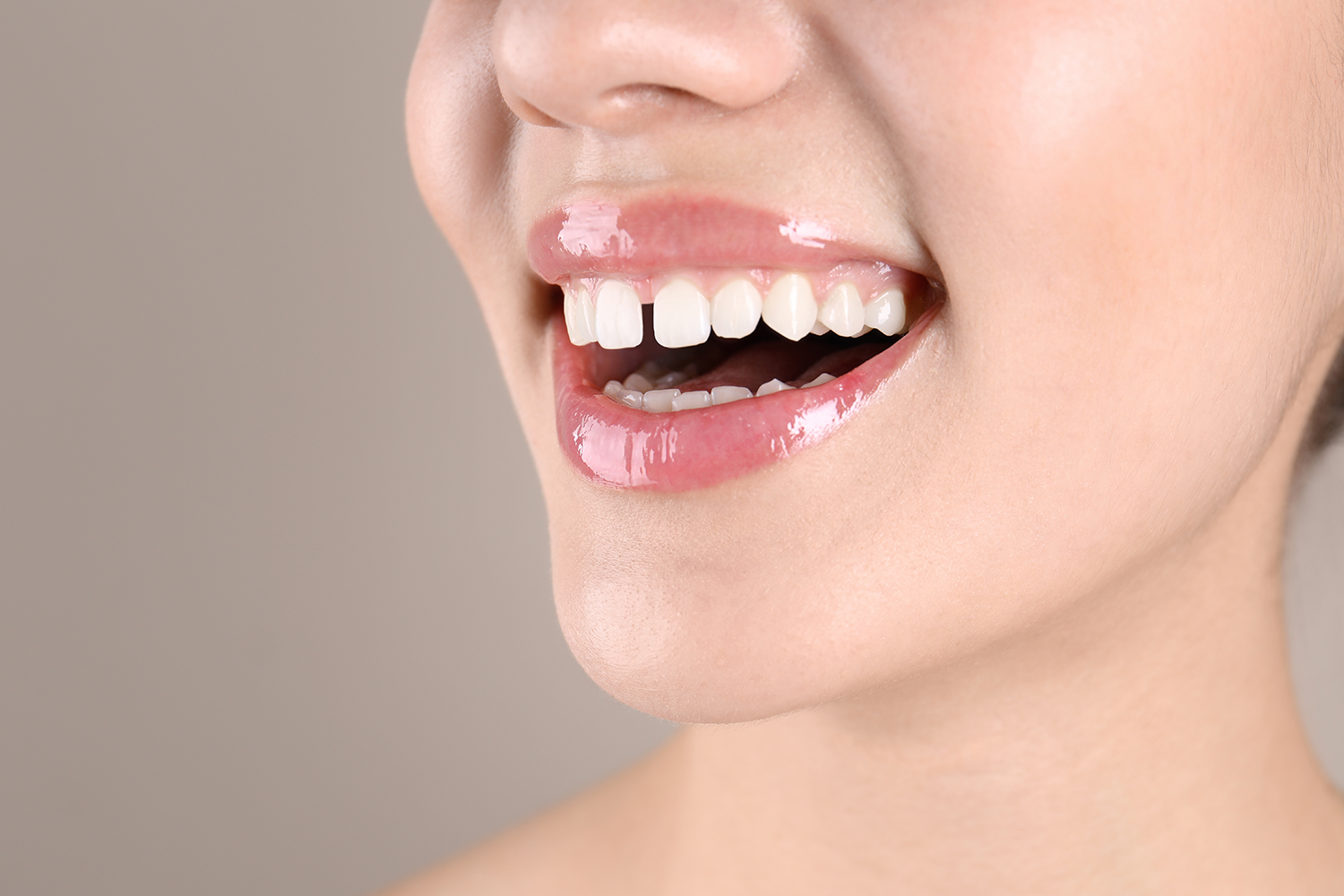
Summary
- Veneers can close small to moderate gaps by making the teeth beside the space wider.
- Aligners or braces may be more suitable if the gap is wide or accompanied by misalignment or bite problems.
- Active gum disease or other underlying causes for diastema must be treated before closing a gap with veneers.
If you have a gap between your front teeth, closing the space may seem like a straightforward cosmetic goal. But the right approach depends on more than appearance.
The size and cause of the diastema, your bite, and the condition of your teeth and gums need to be considered before proceeding with treatment. Here’s what to know about veneers and the alternatives.
Table of Contents
ToggleWhat Causes a Gap Between the Teeth (Diastema)?
A diastema can develop for several reasons:
- Jaw and tooth size mismatch. If your teeth are proportionally smaller than your jaw, gaps can appear naturally as your adult teeth settle into position.
- An enlarged or low-lying labial frenum (the band of tissue connecting your upper lip to your gum). If it extends too far between the front teeth, it can hold them apart. A minor procedure called a frenectomy may be recommended as part of treatment.
- Gum disease (periodontitis) and bone loss. As the structures supporting the teeth deteriorate, teeth may shift, and gaps can develop.
- Thumb sucking or prolonged pacifier use in childhood. These habits can push the front teeth forward and apart.
- Natural spacing. Some people have a diastema without an underlying dental problem.
Can Veneers Close a Gap?
In many cases, yes. Veneers are thin shells of porcelain or composite resin bonded to the front of the teeth. By increasing the width of one or both teeth beside a gap, veneers can close the space visually.
They are generally suited to small or moderate gaps caused by natural spacing or a mismatch between tooth and jaw size. A wide gap, significant misalignment, or a bite problem may call for orthodontic treatment instead. Any active condition, including gum disease, must be treated first.
Your dentist will assess the gap, bite, and proportions of your teeth before recommending treatment.
Composite Veneers vs Porcelain Veneers vs Aligners for Gaps
The appropriate treatment depends on your teeth, bite, budget, timeline, and how much natural tooth structure you want to preserve.
When Composite Veneers Are Enough
Composite veneers are made from tooth-coloured resin applied directly to the teeth and sculpted to close the gap. They can work well for small diastemas in otherwise healthy, well-aligned teeth.
Composite is generally less expensive than porcelain, can often be completed in one appointment, and may require little or no removal of natural tooth structure. The trade-off is durability: composite is more susceptible to chipping and may need maintenance or replacement sooner.
When Porcelain Veneers Are a Suitable Choice
Porcelain veneers may suit moderate gaps or teeth that would also benefit from changes in colour, shape, or proportion. Custom-made porcelain allows for careful shaping and colour matching, resists staining, and closely replicates the translucency of natural enamel.
Porcelain may also be considered when existing composite veneers have worn or chipped and a more durable restoration is desired.
When Aligners or Braces Make More Sense
Clear aligners or fixed braces may be more appropriate for a wide gap, crowded or rotated teeth, or a bite problem that could be worsened by making the teeth wider with veneers.
Rather than disguising the space, these orthodontic treatment options are used to move the teeth into new positions.
Still unsure what kind of treatment you need? Schedule a consultation at Brightside Dental to get started.
How We Close Gaps with Veneers
At Brightside, the process is designed so you can see and experience your result before committing to it permanently.
- Your dentist discusses what you would like to change about your smile and the result you hope to achieve.
- Digital scans are taken of your teeth.
- You work with your dentist to choose the width, length, texture, and shade of the veneers. You can also bring photos of smiles you like to help guide the design.
- A physical mock-up is placed over your teeth so you can see how your smile could look with the gap closed.
- You can request changes to the mock-up before any permanent work begins.
- For porcelain veneers, a small amount of enamel is removed to make room for the veneers. At Brightside, a minimum of 0.3 millimetres is removed at the margins.
- Temporary veneers are fitted while the permanent veneers are made in the laboratory.
- You wear the temporary veneers for a week or two, giving you time to see how the design looks and feels in everyday life.
- You can request further refinements before the permanent veneers are completed.
- The permanent veneers are bonded to your teeth.
- Your dentist checks your bite and makes any necessary adjustments.
What It Costs to Close a Gap with Veneers
Closing a diastema with veneers typically involves at least two teeth, so the total cost will depend on the number treated. The cost of veneers, aligners, and braces varies with the complexity and duration of treatment. Here’s what to expect at Brightside:
| Treatment | Cost |
| Composite veneers | $549 per tooth |
| Porcelain veneers | $1,530 per tooth |
| Clear aligners | From $3,000 (single arch) |
| Braces | From $3000 (single arch) |
How Brightside Decides the Right Option for You
A Complete Smile Assessment at Brightside Dental considers the size and cause of the gap, the health of your teeth and gums, your bite, and your priorities.
For some patients, veneers are the right fit. For others, the more appropriate path might be composite veneers, clear aligners, or a combination approach. Our A.B.C. treatment (Align, Brighten, Contour) offers a way to address alignment, whitening, and veneer contouring together as a coordinated smile makeover, which may be worth exploring if you have broader cosmetic goals beyond closing the gap.
The recommendation will depend on what is clinically appropriate for your teeth and likely to provide a lasting result.
Frequently Asked Questions
With proper care, porcelain veneers may last 10 years or longer. Composite veneers generally require more maintenance because they are more prone to chipping.
Talk to Brightside Dental About Closing Your Gap
Not sure whether veneers are the right way to close your gap? Book a consultation with one of our dentists to find out which treatment options may be suitable for you.