Summary
- Composite veneers can improve chips, uneven edges, small gaps, and mild asymmetry.
- They’re usually more affordable than porcelain veneers, but may need more upkeep.
- They’re better for cosmetic refinements than major bite or alignment problems.
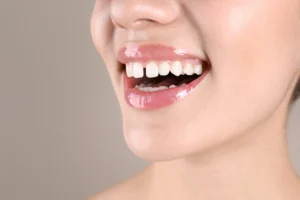
Have you ever stared at a celebrity’s teeth and wondered how they can be so white and straight? Hollywood-perfect smiles may not always be the result of consistent oral hygiene, but instead a cosmetic dental treatment called veneers.
It’s grown in demand so much that, according to Grand View Research, the global dental veneers market is projected to nearly double in value — reaching USD $11.45 billion by 2030.
With so much hype surrounding veneers, you may be thinking of getting one yourself. Should you? And would composite veneers be the right choice? Read on to find out.
Table of Contents
ToggleCommon Cosmetic Concerns Composite Veneers Can Address
Composite veneers are thin layers of tooth-coloured resin applied to the front surface of your teeth. They’re usually used when you want to improve the appearance of your smile without changing the entire structure of your teeth.
Chipped, Uneven, Or Worn Teeth
Small chips, uneven edges, and worn-down teeth are some of the most common reasons people explore composite veneers in Singapore.
This kind of wear can happen gradually from:
- Teeth grinding
- Ageing
- Nail biting
- Everyday wear and tear
On their own, they may seem minor. But when they affect the front teeth, they can make your smile look less even.
Composite resin can be shaped directly onto the tooth to rebuild worn edges, refine irregular contours, and improve tooth proportions.
Small Gaps And Minor Alignment Concerns
Composite veneers may also help with small gaps or mild tooth unevenness.
For example, if you have slight spacing between your front teeth, a dentist may be able to reshape the sides of the teeth with composite resin so the gap appears less obvious. Mild rotations or uneven tooth widths may also look more balanced after treatment.
However, veneers are not a replacement for orthodontics. If you have significant crowding, larger gaps, or bite problems, clear aligners or braces may be more appropriate.
When Whitening, Bonding, Or Orthodontics May Not Be Enough
Some people explore composite veneers after realising other treatments can only address part of the problem. Here’s what we mean:
Treatment | What It May Improve | What It Cannot Usually Correct |
Staining and discolouration | Tooth shape or worn edges | |
Small chips | Multiple cosmetic concerns across several teeth | |
Alignment | Tooth colour or proportions |
In some cases, the right plan may involve more than one treatment. At Brightside Dental, our Complete Smile Assessment helps us look at your teeth, gums, bite, and cosmetic goals before recommending a treatment plan.
What Should You Consider Before Getting Composite Veneers?
Before getting veneers, you shouldn’t just think about whether they will look good. You should also ask yourself, “Will composite veneers work well for my teeth long term?”
Your Cosmetic Goals And Expectations
Start thinking about what you actually want to change. Some patients want subtle refinements. Others want a brighter, more uniform smile. Your goals affect the veneer shade, shape, and overall design.
That said, composite veneers improve your smile. They don’t create mathematical perfection. Natural facial asymmetry, gum shape, and tooth position may still affect the final result.
The Condition Of Your Teeth And Gums
Your teeth and gums need to be stable before cosmetic treatment begins.
A dentist may need to manage these issues first:
- Tooth decay
- Gum disease
- Significant enamel erosion
- Severe teeth grinding
This matters because veneers are placed on top of your existing teeth. If the foundation is unhealthy, the final result may not last as well.
Long-Term Maintenance And Lifestyle Habits
Your bite affects how much pressure your veneers receive when you chew, speak, or grind your teeth.
Certain habits may also increase the risk of staining, chipping, or early wear:
- Smoking
- Frequent coffee or tea consumption
- Nail biting
- Chewing ice
- Teeth grinding
This doesn’t always mean you can’t get composite veneers. But a dentist will need to factor these habits into your treatment plan, so you need to be upfront about them at your first consultation.
Budget Vs Long-Term Value
Composite veneers are often chosen because they’re more affordable upfront and can usually be completed more quickly. Porcelain veneers, on the other hand, generally offer better stain resistance and durability.
How Much Do Composite Veneers Cost In Singapore?
The final price of treatment for composite veneers in Singapore can vary depending on:
- The number of teeth being treated
- The complexity of the case
- The materials used
- Whether additional smile planning is required
Composite veneers usually cost less than porcelain veneers because they’re applied directly onto your teeth during the appointment. Porcelain veneers require laboratory fabrication, which adds time, materials, and cost.
Why Do Composite Veneers Usually Cost Less Than Porcelain Veneers?
Composite Veneers | Porcelain Veneers |
Applied directly onto the teeth | Custom-made in a laboratory |
Usually completed more quickly | Usually requires multiple appointments |
Less laboratory involvement | More laboratory fabrication |
Lower upfront cost | Higher upfront cost |
For some patients, the lower upfront cost makes composite veneers a practical starting point. Others may prefer porcelain for longer-term durability. Speak to a dentist at Brightside Dental for a more comprehensive understanding of the factors you need to consider before deciding on composite veneers.
What Results Can You Realistically Expect From Composite Veneers?
Composite veneers can improve your smile overall, but the result depends on your starting point.
Improvements In Shape, Colour, And Symmetry
Composite veneers can help improve:
- Chipped edges
- Uneven tooth shapes
- Mild spacing
- Tooth discolouration
Because the resin is applied directly, a dentist can shape the material during the appointment. This allows adjustments to tooth length, width, and contour.
What Composite Veneers Cannot Correct
Composite veneers are cosmetic. They’re not designed to solve every dental problem. They’re generally not suitable for:
- Severe crowding
- Significant bite problems
- Large fractures
- Advanced tooth decay
In these cases, you may need orthodontic or restorative treatment before veneers are considered.
How Long Composite Veneers Typically Last
Composite veneers can last for several years, though longevity varies depending on factors such as bite pressure, teeth grinding, oral hygiene, and daily habits. The upside is that they can be repaired more easily if small defects develop.
Staining, Chipping, And Long-Term Maintenance
Composite veneers may gradually stain over time, especially with regular exposure to:
- Coffee
- Tea
- Smoking
- Red wine
- Strongly coloured foods
Regular polishing, good oral hygiene, and avoiding excessive pressure on the front teeth may help maintain their appearance longer.
That said, in many cases, composite veneers may last several years before touch-ups or replacement become necessary.
What Is The Process Of Getting Composite Veneers In Singapore?
The process is usually more straightforward than porcelain veneers because composite resin is applied directly to the teeth.
Consultation And Smile Planning
Your dentist will first assess your teeth, gums, bite, and cosmetic concerns.
At Brightside Dental, we’ll discuss what you want to improve and whether composite veneers are suitable for your teeth. In some cases, photos or digital scans may be used to plan the smile design.
Tooth Preparation And Shade Matching
Composite veneers usually require minimal tooth preparation. Your dentist may lightly roughen or reshape the enamel surface to help the material bond properly. A composite shade is then chosen based on your desired result and the colour of surrounding teeth.
Composite Layering And Sculpting
The composite resin is applied in layers, and each layer is shaped, hardened with a curing light, and refined until the tooth reaches the desired contour. This step is where your dentist adjusts the tooth’s shape, edge, and surface texture.
Polishing, Final Adjustments, And Aftercare
Once the veneers are shaped, they’re polished for the last time. Your dentist will also check your bite to reduce unnecessary pressure on the veneers. Before you leave, you’ll receive advice on cleaning, stain prevention, and habits to avoid.
Thinking About Getting Composite Veneers In Singapore? Start With A Consultation
The best veneer treatment is not necessarily the whitest or most expensive one. At Brightside Dental, our dentists take a personalised approach to smile planning.
Book a consultation with us to find out whether composite veneers can achieve your goals and are suitable for your teeth, bite, and lifestyle.